

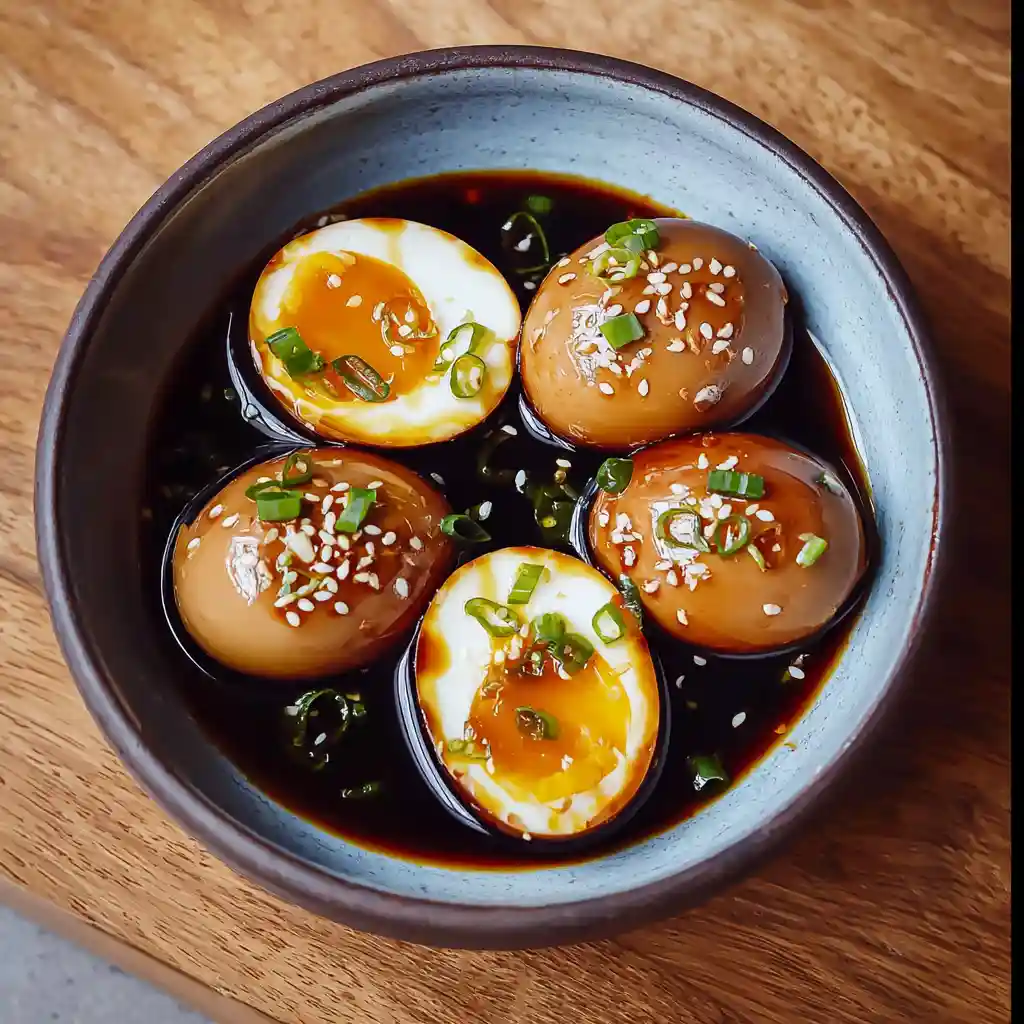
Do you remember the first time you tried something that just exploded with flavor, something so savory and rich that it completely changed your perception of what a simple ingredient could be? For me, that was soy sauce eggs.
The umami-packed, slightly sweet, utterly addictive taste of these little gems had me hooked from the first bite. The best part? This recipe for soy sauce eggs takes just over 8 hours to make, and most of that is marinating time.
Table of Contents

Amazing Soy Sauce Eggs: A Simple Flavor Explosion
Ingredients
Method
- In a quart-sized jar or container (with a lid), whisk together the soy sauce, water, apple cider vinegar, brown sugar, chili garlic sauce, and scallions.
- Place the eggs in the soy sauce mixture, making sure they're all submerged.
- Seal with the lid and marinate in the refrigerator overnight/8 hours. (Marinating for just a few hours will give you a subtle salty soy sauce flavor, while soaking overnight will make the color and flavor much deeper and better.)
- Remove the eggs from the liquid and serve as desired. We love them sliced in half with a bit of fresh cracked pepper, sesame oil, pickled red onion, and diced scallions. They're also fantastic over ramen, rice, or a salad for a quick, filling meal.
Nutrition
Notes
Tried this recipe?
Let us know how it was!Why You’ll Love This Soy Sauce Eggs Recipe
This soy sauce eggs recipe is a game-changer for so many reasons. First, the preparation is incredibly easy; I’m talking minimal effort for maximum flavor. Second, the depth of flavor you achieve from such simple ingredients is astonishing. Third, soy sauce eggs are incredibly versatile.
What are Soy Sauce Eggs? (Regional Variations)
Soy sauce eggs are essentially eggs that have been cooked (either hard-boiled or soft-boiled) and then marinated in a mixture primarily composed of soy sauce. This infuses the eggs with a savory, umami-rich flavor that is absolutely addictive. While the core concept remains the same, soy sauce eggs manifest differently across various Asian cuisines.
Think of Mayak eggs from Korea, known for their spicy kick and vibrant marinade. Then there are the Japanese ramen eggs (Ajitsuke Tamago), often sweeter and less intense. Taiwanese tea eggs, simmered in a spiced tea and soy sauce broth, offer a unique aromatic experience. Each variation showcases a unique take, reflecting local tastes and culinary traditions.
Ingredients for Perfect Soy Sauce Eggs
Here’s what you’ll need to make the perfect batch of soy sauce eggs:
- 1 cup low-sodium soy sauce: This forms the base of our marinade, providing that signature salty and umami flavor. Using low-sodium soy sauce allows us to control the saltiness and avoid an overly intense flavor.
- 6 tablespoons water: Water helps to dilute the soy sauce slightly, balancing the flavors and preventing the eggs from becoming too salty.
- 3 tablespoons apple cider vinegar: This adds a subtle tanginess to the marinade, which complements the richness of the soy sauce and brown sugar.
- 2 tablespoons brown sugar: Brown sugar lends a touch of sweetness and depth of flavor to the marinade, creating a delicious sweet-and-savory profile.
- 1 teaspoon chili garlic sauce: This adds a gentle kick of heat and a hint of garlic flavor, elevating the complexity of the marinade.
- 2 scallions (diced): Scallions contribute a fresh, oniony flavor to the marinade, adding another layer of complexity.
- 6 large hard boiled eggs (peeled (or soft boiled)): These are the stars of the show. You can use either hard-boiled or soft-boiled eggs, depending on your preference for yolk consistency.
How to Make Soy Sauce Eggs: Step-by-Step Instructions
Let’s get cooking! Here’s how to make these flavor-packed soy sauce eggs:
- In a quart-sized jar or container (with a lid), whisk together the soy sauce, water, apple cider vinegar, brown sugar, chili garlic sauce, and scallions. This is your flavorful marinade, so make sure everything is well combined.
- Place the eggs in the soy sauce mixture, making sure they’re all submerged. This ensures even marination and flavor distribution.
- Seal with the lid and marinate in the refrigerator overnight/8 hours. Marinating for just a few hours will give you a subtle salty soy sauce flavor, while soaking overnight will make the color and flavor much deeper and better.
- Remove the eggs from the liquid and serve as desired. I love them sliced in half with a bit of fresh cracked pepper, sesame oil, pickled red onion, and diced scallions. They’re also fantastic over ramen, rice, or a salad for a quick, filling meal.
Achieving Perfect Egg Doneness for Soy Sauce Eggs
The doneness of your eggs is crucial. A perfectly cooked egg, whether hard or soft-boiled, will absorb the marinade more evenly and have a better texture. For soft-boiled eggs, aim for a runny yolk that oozes out when you cut into it.
For hard-boiled eggs, ensure the yolk is cooked through but still slightly creamy. Overcooked eggs will have a rubbery texture and a green ring around the yolk, which we want to avoid.
Marinade Customization: Adjusting the Flavor of Your Soy Sauce Eggs
The best part about this recipe is how easily you can tweak the marinade to suit your taste!
| Ingredient | Effect |
|---|---|
| Rice Vinegar | Adds a milder, slightly sweet tang compared to apple cider vinegar. |
| Black Vinegar | Imparts a deeper, more complex acidity with slightly smoky notes. |
| Honey | Provides a floral sweetness and a stickier consistency to the marinade. |
| Maple Syrup | Lends a rich, caramel-like sweetness with a hint of maple flavor. |
| Star Anise | Infuses a warm, licorice-like aroma and flavor. |
| Cinnamon Stick | Adds a sweet and spicy warmth, perfect for a cozy flavor profile. |
| Ginger (fresh, sliced) | Provides a zesty and slightly spicy note, adding a refreshing element. |
| Dried Chilies | Increases the heat level; use sparingly to avoid overpowering the other flavors. |
| Sesame Oil | A few drops add a nutty aroma and a richer mouthfeel to the finished eggs. |
Serving Suggestions for Soy Sauce Eggs
Soy sauce eggs are incredibly versatile. Beyond the usual ramen and rice toppings, consider adding them to salads for a protein boost, slicing them into sandwiches for an umami kick, or serving them as appetizers with a sprinkle of sesame seeds and scallions. They’re also a fantastic addition to bento boxes for a flavorful and satisfying meal.
Storing Soy Sauce Eggs: Best Practices
Soy sauce eggs are best stored in the refrigerator in an airtight container, submerged in the marinade. This helps them retain their moisture and flavor. While they can last for up to a week, the texture and flavor will change over time. The longer they sit, the saltier and firmer they become. I find they’re at their peak within the first 3-4 days.
Troubleshooting Common Problems with Soy Sauce Eggs
Encountering rubbery eggs? This usually means they were overcooked to begin with. Make sure not to overcook your eggs.
If the marinade is too strong, dilute it with a bit of water and add a touch more sugar to balance the flavors. If it’s too weak, add a splash more soy sauce and let it marinate for a longer period.
Health Considerations: Sodium Content in Soy Sauce Eggs
Soy sauce is naturally high in sodium, so it’s important to be mindful of the sodium content in soy sauce eggs. Using low-sodium soy sauce is a great way to reduce the overall sodium level. You can also adjust the marinade ratios, using more water and less soy sauce to dilute the sodium concentration. The longer soy-sauce eggs marinate, the more flavorful they’ll be, but also the higher the sodium absorption.
Advanced Techniques for Soy Sauce Eggs
For an even more intense flavor, try vacuum sealing the eggs with the marinade. This helps the flavors penetrate the eggs more quickly and evenly. Experimenting with different types of soy sauce, such as dark soy sauce or tamari, can also add unique nuances to the flavor profile.
Frequently Asked Questions
Here are some common questions I get about soy sauce eggs:
Can I vary the ingredients in the marinade?
Absolutely! Feel free to experiment with different vinegars, sweeteners, and spices to create a marinade that suits your taste preferences.
Does it matter how long I marinate them for?
Yes, the marinating time significantly impacts the flavor and color of the eggs. Marinating for a few hours will give you a subtle flavor, while marinating overnight will result in a much deeper and richer taste.
Can I use the marinade again for another batch?
I don’t recommend reusing the marinade, as it may contain bacteria from the eggs. It’s best to make a fresh batch for each new set of eggs.
Conclusion
Making soy sauce eggs is an incredibly rewarding culinary experience. The ease of preparation, the depth of flavor, and the versatility of this dish make it a must-try for any food lover. I hope this recipe inspires you to create your own delicious versions of soy sauce eggs.
Now, I’d love to hear from you! What variations of soy sauce eggs have you tried, or what ingredients would you like to experiment with? Leave a comment below, ask a question, or share your results. I can’t wait to see what you create!