

I’ll never forget the first time I tried Mayak Eggs. The perfectly jammy yolk, the savory-sweet marinade; it was love at first bite. I instantly understood why they’re called “Mayak,” which translates to “drug” in Korean—they’re seriously addictive!
Today, I’m so excited to share my take on this classic Korean side dish with you. Get ready to unlock a world of flavor with these Korean marinated eggs, and remember, the total time, including marinating, is at least 6 hours, but trust me, it’s worth every second!
Table of Contents


Amazing Mayak Eggs: Korean Marinated Eggs
Ingredients
Method
- In a bowl or a container, add the soy sauce, water, honey, diced onion, diced green onion, minced garlic, diced chili pepper, and toasted sesame seeds. Mix to combine, ensuring all the honey is scraped from the bottom. This is your flavorful marinade!
- Add white vinegar and salt to a pot of boiling water. Reduce the heat to a gentle simmer. Gently place each egg into the simmering water. Simmer for 6 minutes for jammy yolks (or 10 minutes for hard-boiled eggs, if that’s your preference).
- Prepare a large bowl of ice water. When the timer goes off, immediately transfer the eggs to the ice water bath. Allow the eggs to cool completely, for at least 5-10 minutes. This step is crucial for easy peeling!
- Gently peel the eggs and add them to the marinade. Make sure the eggs are submerged. Cover tightly and store in the refrigerator overnight, or at least 6 hours. The longer they marinate, the more flavorful they become!
- To serve, place the egg over a bed of rice and garnish with green onion, seaweed flakes, and/or sesame oil to your preference. These eggs serve as an excellent garnish over a bowl of noodles as well. Enjoy every single bite!
Notes
Tried this recipe?
Let us know how it was!What are Mayak Eggs? (Korean Marinated Eggs)
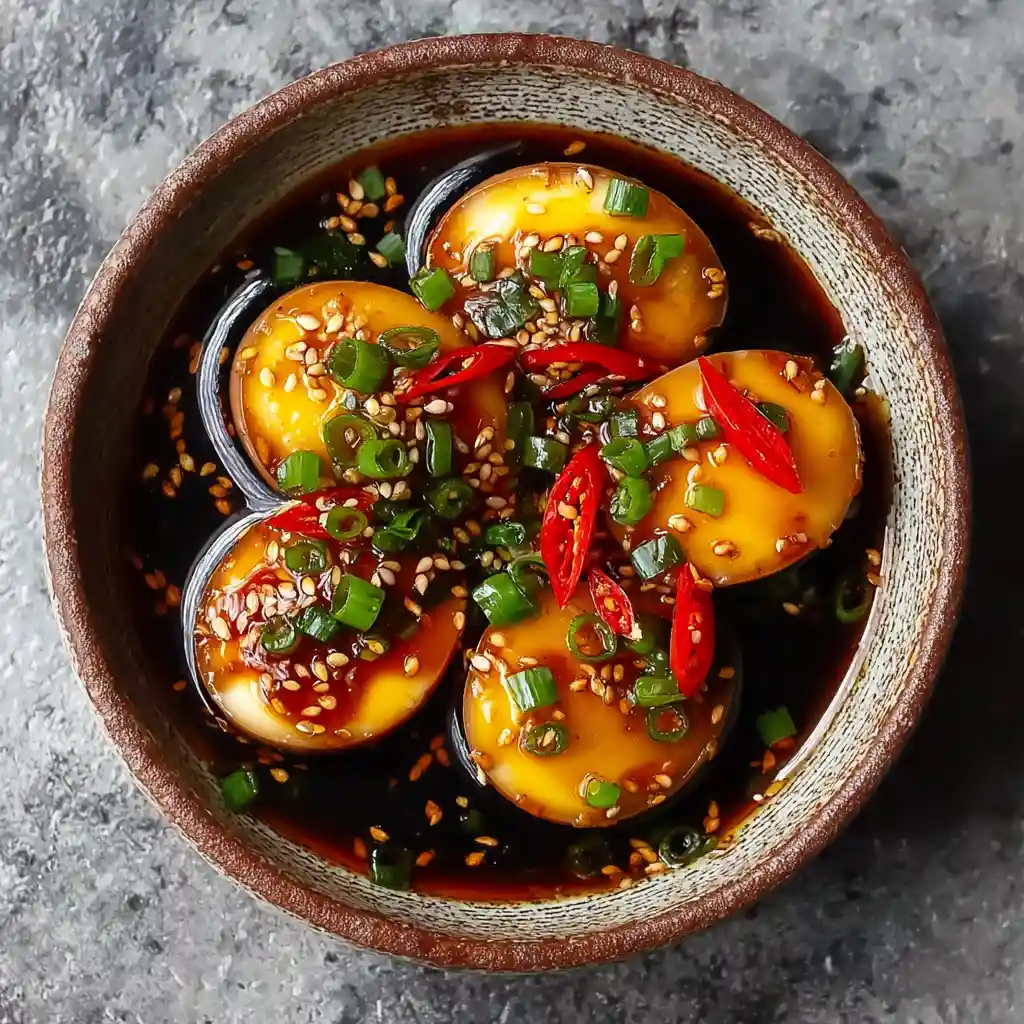
“Mayak” (마약) literally means “drug” in Korean, and it’s no exaggeration when describing these eggs. The name reflects just how incredibly addictive they are! In Korea, Mayak Eggs are a beloved side dish, often enjoyed with rice, noodles, or as a snack. Their popularity has exploded in recent years, with countless variations popping up in home kitchens and restaurants alike.
Everyone has their own little twist on the recipe, but the core idea remains the same: perfectly cooked eggs soaked in a savory-sweet marinade that will leave you craving more. I think you will be craving more too, once you have your first bite!
Why You’ll Love This Mayak Eggs Recipe
I know there are tons of Mayak Egg recipes out there, but I truly believe you’ll adore this one for a few reasons:
- Simple Ingredients: I use everyday ingredients that you can easily find in your local grocery store, no fancy stuff needed!
- Perfectly Jammy Yolks: I’ve perfected the cooking time to guarantee that melt-in-your-mouth, jammy yolk that is the hallmark of a great Mayak Egg.
- Balanced Marinade: My marinade is the perfect balance of savory, sweet, and slightly spicy, complementing the richness of the egg without overpowering it.
- Easy to Customize: Want it spicier? Sweeter? I’ve got you covered with tips on how to adjust the recipe to your liking.
The Cultural Significance and History of Mayak Eggs
Marinated eggs have a long history in Korean cuisine, with various versions appearing across different regions and households. Mayak Eggs, in particular, gained immense popularity in recent years, thanks to social media and food blogs. They represent the Korean love for banchan (side dishes) that are flavorful, versatile, and easy to prepare.
Each family often has its unique marinade recipe, passed down through generations, making Mayak Eggs a dish that’s both deeply personal and widely enjoyed. The concept of preserving and flavoring eggs in marinades is seen in many cultures, but the specific flavor profile and popularity of Mayak Eggs are distinctly Korean.
Mayak Eggs Ingredients
Here’s what you’ll need to create these addictive little flavor bombs:
- 6 large eggs (at room temperature)
- 1 tbsp each salt and white vinegar (for boiling the eggs)
- green onions, seaweed flakes, and/or sesame oil (for garnish, optional)
- 1/2 cup soy sauce
- 1/2 cup water
- 1/4 cup honey (corn syrup, oligo syrup, or your choice of liquid sweetener)
- 1/4 medium onion (diced)
- 1 green onion (diced)
- 3 cloves garlic (minced)
- 2 chili pepper (diced)
- 1 tbsp toasted sesame seeds
I always recommend using high-quality ingredients for the best flavor. For the soy sauce, I prefer a naturally brewed one for its richer taste. As for the honey, feel free to use your favorite liquid sweetener, but I find that honey adds a lovely depth of flavor. When it comes to chili peppers, adjust the amount to your spice preference. I like using Korean chili peppers (gochu peppers) for an authentic touch, but any kind will work!
Step-by-Step Guide to Making Perfect Mayak Eggs
Follow these simple steps, and you’ll be enjoying your own batch of Mayak Eggs in no time:
- In a bowl or a container, add the soy sauce, water, honey, diced onion, diced green onion, minced garlic, diced chili pepper, and toasted sesame seeds. Mix to combine, ensuring all the honey is scraped from the bottom. This is your flavorful marinade!
- Add white vinegar and salt to a pot of boiling water. Reduce the heat to a gentle simmer. Gently place each egg into the simmering water. Simmer for 6 minutes for jammy yolks (or 10 minutes for hard-boiled eggs, if that’s your preference).
- Prepare a large bowl of ice water. When the timer goes off, immediately transfer the eggs to the ice water bath. Allow the eggs to cool completely, for at least 5-10 minutes. This step is crucial for easy peeling!
- Gently peel the eggs and add them to the marinade. Make sure the eggs are submerged. Cover tightly and store in the refrigerator overnight, or at least 6 hours. The longer they marinate, the more flavorful they become!
- To serve, place the egg over a bed of rice and garnish with green onion, seaweed flakes, and/or sesame oil to your preference. These eggs serve as an excellent garnish over a bowl of noodles as well. Enjoy every single bite!
Tips for Perfectly Jammy Mayak Eggs Every Time
- Room Temperature Eggs: Starting with room temperature eggs helps prevent them from cracking during boiling.
- Gentle Simmer: Avoid a rolling boil, as it can cause the eggs to crack.
- Ice Bath is Key: The ice bath stops the cooking process and makes the eggs much easier to peel.
- Don’t Overcook: For that perfect jammy yolk, stick to the 6-minute cooking time.
- Patience is a Virtue: The longer the eggs marinate, the more flavorful they become. I recommend at least 6 hours, but overnight is even better!
Troubleshooting Common Mayak Egg Problems
- Eggs Cracking: This is usually caused by temperature shock. Make sure your eggs are at room temperature and the water is at a gentle simmer, not a rolling boil.
- Difficulty Peeling: An ice bath is your best friend! If the eggs are still difficult to peel, try peeling them under running water.
- Marinade Not Flavorful Enough: Make sure to use high-quality soy sauce and don’t skimp on the garlic and chili peppers. You can also add a pinch of sugar or a splash of rice vinegar to boost the flavor.
- Eggs Too Hard/Too Soft: Adjust the cooking time to your preference. 6 minutes is ideal for jammy yolks, but you can cook them longer for harder yolks.
Delicious Variations on Mayak Eggs
Want to mix things up? Here are some fun variations to try:
| Variation | Ingredient Substitution | Notes |
|---|---|---|
| Vegetarian/Vegan | Replace honey with maple syrup | Adjust sweetness to taste. |
| Spicy | Add more chili peppers or gochujang | Be cautious with the amount to avoid overpowering the other flavors. |
| Lower Sodium | Use low-sodium soy sauce | The flavor will be milder, so you might need to adjust other seasonings. |
What to Eat With Your Korean Marinated Eggs (Serving Suggestions)
While Mayak Eggs are delicious on their own, they’re even better when paired with other dishes. I love serving them over a bed of warm rice with a sprinkle of seaweed flakes and sesame oil. They’re also fantastic in noodle soups, bibimbap, or even as a topping for avocado toast! And I have even added them to a slice of pizza! A great savory dish to pair them with would be The Best Korean Ground Beef Bowl Recipe.
Creative Uses for Leftover Mayak Egg Marinade
Don’t toss that leftover marinade! It’s packed with flavor and can be used in so many ways. Try using it as a marinade for tofu or chicken, a salad dressing, or a flavor enhancer for soups and stews. It’s especially delicious with tofu, adding depth and richness to the dish. I have used the leftover marinade with tofu and a few veggies to create a quick stir-fry!
For other creative flavor pairings, consider our Simple Chinese Scallion Chicken Recipe.
How to Store Mayak Eggs Safely
Mayak Eggs should be stored in an airtight container in the refrigerator. They’ll last for up to 3-4 days. Be sure to check for any signs of spoilage, such as a foul odor or slimy texture, before consuming.
For detailed information on egg storage and safety, you can refer to resources like the FDA’s Egg Safety page.
Nutritional Information and Health Benefits of Mayak Eggs
Mayak Eggs are a good source of protein, vitamins, and minerals. Eggs are packed with essential amino acids, vitamin D, and choline, which is important for brain health. However, they are also relatively high in cholesterol and sodium, so it’s important to consume them in moderation. Please note that this recipe contains soy and eggs, which are common allergens.
Frequently Asked Questions
Can I freeze Mayak Eggs?
I don’t recommend freezing them, as the texture of the eggs will change.
Can I use brown eggs instead of white eggs?
Absolutely! The color of the egg doesn’t affect the flavor.
How long do the eggs need to marinate?
At least 6 hours, but overnight is best.
Can I make a big batch of Mayak Eggs?
Yes, just double or triple the recipe as needed.
Conclusion
I hope you’re as excited as I am to try this Mayak Egg recipe. They’re incredibly delicious, versatile, and surprisingly easy to make. I have no doubt these will become a new staple in your kitchen. Now, I’d love to hear from you! If you try this recipe, please leave a comment below and let me know how it turned out. And don’t forget to share your results on social media – I can’t wait to see your delicious creations! Happy cooking!