

Hello, lovely people! Jessy here from The Savory Script, and I am absolutely buzzing with excitement to share a recipe with you today that has become a total weeknight superhero in my kitchen. If you’re anything like me, you love meals that are not only bursting with incredible flavor but also pack a serious nutritional punch without a fuss.
That’s exactly what we’re diving into with this Thai Peanut Sweet Potato Buddha Bowl. It’s vibrant, satisfying, and I promise, it’s even easier to make than it sounds. Plus, the whole thing comes together in about 45 minutes, which is music to my ears after a long day.
Table of Contents
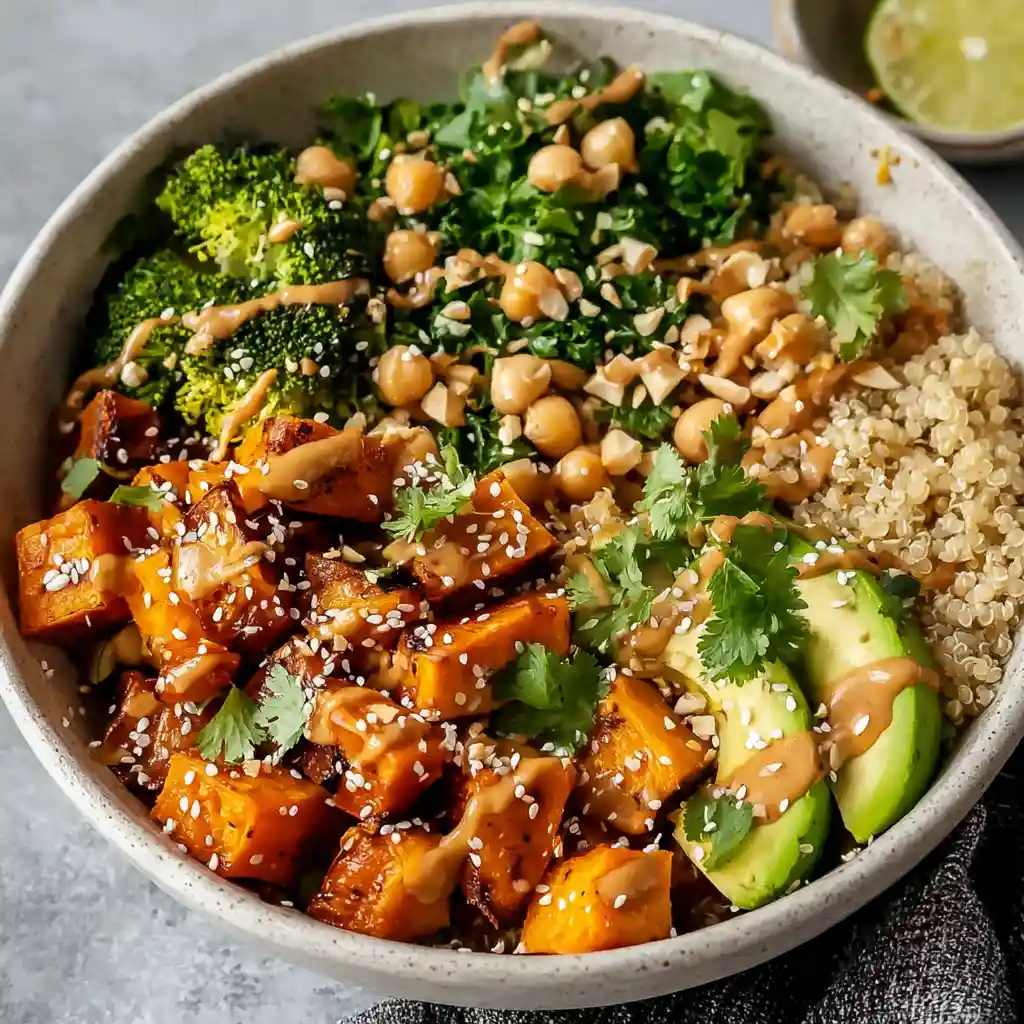

Thai Peanut Sweet Potato Buddha Bowl
Ingredients
Equipment
Method
- Preheat your oven to 400°F (200°C).
- In a bowl, combine the cubed sweet potato and rinsed chickpeas. Drizzle with oil and sprinkle with soy sauce or tamari, maple syrup, sriracha, minced garlic, and red pepper flakes. Toss everything together until the sweet potatoes and chickpeas are beautifully coated in the delicious seasonings.
- Spread the seasoned sweet potatoes and chickpeas in a single layer on a baking sheet lined with parchment paper. Bake for 30-35 minutes, or until the sweet potato is easily pierced with a fork and has lovely caramelized edges.
- While the sweet potatoes are roasting, cook your grain of choice according to package instructions. For an extra layer of flavor, try cooking your grain in vegetable broth instead of water!
- Add the chopped broccoli and shelled edamame to a pot with about 1 inch of water. Cover and steam for 5-7 minutes, or until the broccoli is just tender but still has a nice bite. Drain off any excess water.
- Now for the fun part! Divide your cooked grain among serving bowls. Top with the steamed broccoli and edamame, the roasted sweet potatoes and chickpeas, and slices of fresh avocado. Drizzle generously with that amazing peanut sauce, and finish with a sprinkle of chopped cilantro and crushed peanuts. Add a few extra red pepper flakes if you like it extra spicy!
Nutrition
Notes
Tried this recipe?
Let us know how it was!What Exactly is a Buddha Bowl?
So, what exactly is a Buddha Bowl? At its heart, a Buddha Bowl is a beautiful, artful assembly of various healthy ingredients, typically served in a single bowl. The philosophy behind it is all about balance and abundance, representing a mindful way of eating.
You’ll usually find a base of grains, a good source of protein, an array of colorful vegetables, and of course, a delicious sauce to tie it all together. The magic of the Buddha Bowl lies in its incredible versatility; it’s a fantastic template that allows you to get creative with whatever you have on hand.
Why You’ll Absolutely Love This Thai Peanut Sweet Potato Buddha Bowl
I’ve put a lot of love into perfecting this recipe, and I truly believe it’s a winner for so many reasons:
- Effortlessly Delicious: This bowl is packed with vibrant, Thai-inspired flavors that dance on your palate, yet it’s surprisingly simple to pull together.
- Nutrient Powerhouse: It’s loaded with wholesome ingredients like sweet potatoes, chickpeas, quinoa, and edamame, making it a meal that truly nourishes you.
- Endlessly Customizable: Whether you have specific dietary needs or just want to switch things up, this recipe is incredibly forgiving and adaptable to your tastes.
- Meal Prep Dream: Make a batch of components ahead of time, and you’ll have healthy, satisfying lunches or dinners ready to go for days.
- Bursting with Flavor: The combination of savory roasted sweet potatoes and chickpeas, fresh veggies, and that luscious peanut sauce is simply irresistible.
Achieving Perfectly Crispy Roasted Sweet Potatoes and Chickpeas
Getting those roasted sweet potatoes and chickpeas just right is key to this bowl’s texture and flavor. A few little tricks can make all the difference. First, try to cube your sweet potatoes into roughly uniform pieces. This helps them cook evenly. When it comes to chickpeas, make sure they are well-drained and rinsed, and then patted as dry as you can get them before tossing with the oil and seasonings. This is crucial for achieving that delightful crispiness.
Don’t overcrowd your baking sheet. Give everything a little breathing room so the air can circulate and roast the ingredients instead of steaming them. I find that baking at a good 400°F (200°C) for about 30-35 minutes usually does the trick. You want the sweet potatoes to be fork-tender on the inside with those gorgeously caramelized, slightly crispy edges. Give them a check halfway through and maybe give the pan a little shake to encourage even browning.
Thai Peanut Sauce: The Heart of Thai Peanut Sweet Potato Buddha Bowl
No Buddha Bowl is complete without a sensational sauce, and this peanut sauce is truly the star of the show here. It’s creamy, a little sweet, a little spicy, and perfectly complements all the other elements. This recipe makes a half batch, which is just the right amount for these bowls.
Here’s what you’ll need to whip up this magical sauce:
- 1/2 cup creamy peanut butter
- 2 tablespoons soy sauce or tamari
- 2 tablespoons maple syrup
- 1-2 tablespoons sriracha (adjust to your spice preference!)
- 2 teaspoons minced garlic
- 1/2 teaspoon red pepper flakes (optional, for extra heat)
- 2-4 tablespoons warm water, to thin to desired consistency
Simply whisk all the ingredients together in a bowl until smooth and creamy. If it seems a little too thick, add warm water a tablespoon at a time until it reaches your desired drizzling consistency.
Customizing Your Thai Peanut Sauce
The beauty of homemade sauce is that you can tailor it exactly to your liking!
- Spice Level: If you like it mild, start with just 1 tablespoon of sriracha and omit the red pepper flakes. For a spicier kick, feel free to add a bit more sriracha or a pinch more red pepper flakes.
- Thickness: To thin the sauce, a little warm water is your best friend. A splash of lime juice can also add a nice brightness while thinning it out. If it’s accidentally too thin, you can gently warm it in a small saucepan and whisk in a cornstarch slurry (1 teaspoon cornstarch mixed with 1 tablespoon cold water) until it thickens.
- Flavor Variations: For an extra layer of complexity, consider adding a teaspoon of grated fresh ginger, a squeeze of fresh lime juice, or a bit of lime zest.
- Nut-Free Alternative: If nuts aren’t your thing, tahini or sunflower seed butter make excellent substitutes for peanut butter, offering a similar creamy texture and rich flavor. For another amazing way to use peanut butter, try our Peanut Butter Banana Breakfast Cookies.
- Sugar-Free Option: To make this sugar-free, you can omit the maple syrup or use your favorite sugar substitute, like a liquid stevia or erythritol, adjusting the sweetness to your taste.
The Full Ingredient List for Your Buddha Bowl
Here’s everything you’ll need to bring this colorful and delicious bowl to life:
- 4 cups peeled and cubed sweet potato (about 2 medium potatoes)
- 1 can chickpeas (drained and rinsed)
- 2 tablespoons oil (I used avocado)
- 1 tablespoon soy sauce or tamari
- 1 tablespoon maple syrup
- 1-2 tablespoon sriracha (depending on spice preference)
- 2 teaspoon minced garlic
- 1/2 teaspoon red pepper flakes
- 1 cup uncooked grain of choice (I suggest quinoa, rice or millet!)
- 1 head broccoli (chopped)
- 1 1/2 cup shelled edamame
- 1 avocado
- 1/2 batch peanut sauce
- 1/2 cup chopped peanuts
- 1/2 cup chopped cilantro
Step-by-Step Guide to Crafting Your Thai Peanut Sweet Potato Buddha Bowl
Let’s get cooking! Here’s how to assemble this glorious bowl:
- Preheat your oven to 400°F (200°C). This is the perfect temperature for getting those sweet potatoes nice and tender with crispy edges!
- Toss the sweet potatoes and chickpeas. In a bowl, combine the cubed sweet potato and rinsed chickpeas. Drizzle with oil and sprinkle with soy sauce or tamari, maple syrup, sriracha, minced garlic, and red pepper flakes. Toss everything together until the sweet potatoes and chickpeas are beautifully coated in the delicious seasonings.
- Roast to perfection. Spread the seasoned sweet potatoes and chickpeas in a single layer on a baking sheet lined with parchment paper. Bake for 30-35 minutes, or until the sweet potato is easily pierced with a fork and has lovely caramelized edges.
- Cook your grain. While the sweet potatoes are roasting, cook your grain of choice according to package instructions. I love using quinoa or brown rice for this bowl. For an extra layer of flavor, try cooking your grain in vegetable broth instead of water!
- Steam the veggies. Add the chopped broccoli and shelled edamame to a pot with about 1 inch of water. Cover and steam for 5-7 minutes, or until the broccoli is just tender but still has a nice bite. Drain off any excess water.
- Assemble your masterpiece. Now for the fun part! Divide your cooked grain among serving bowls. Top with the steamed broccoli and edamame, the roasted sweet potatoes and chickpeas, and slices of fresh avocado. Drizzle generously with that amazing peanut sauce, and finish with a sprinkle of chopped cilantro and crushed peanuts. Add a few extra red pepper flakes if you like it extra spicy!
Beyond the Basics: Ingredient Swaps and Seasonal Vegetable Ideas
Buddha bowls are all about flexibility, so feel free to make this recipe your own!
| Category | Suggestions | Notes |
|---|---|---|
| Grains | Quinoa, Brown Rice, Millet, Farro, Couscous, Cauliflower Rice (for low-carb) | Choose your favorite or what you have on hand! |
| Proteins | Tofu (marinated & baked/pan-fried), Tempeh, Edamame (in shell), Black Beans (perfect in our Daniel Fast Black Bean Soup), Grilled Chicken/Shrimp (for non-vegan) | For tofu/tempeh, consider marinating in soy sauce, ginger, and garlic. |
| Vegetables | Roasted Brussels Sprouts, Bell Peppers (raw or roasted), Carrots (shredded or roasted), Cucumber (fresh), Spinach (raw or lightly wilted) | Think about color and texture! Aim for a mix of raw, steamed, and roasted elements. |
| Toppings | Sesame Seeds, Green Onions, Sriracha Mayo Drizzle, Crispy Fried Onions, Sprouts | These add an extra layer of flavor and visual appeal! |
Making It Work for Your Diet: Vegan, Gluten-Free, and More
This recipe is wonderfully accommodating for various dietary needs:
- Vegan: This recipe is naturally vegan as written, making it a fantastic plant-based meal!
- Gluten-Free: To ensure this is gluten-free, be sure to use tamari instead of soy sauce, as tamari is typically gluten-free.
- Soy-Free: If you need to avoid soy, swap the soy sauce for coconut aminos or another soy-free soy sauce alternative.
- Nut-Free: As mentioned in the peanut sauce section, you can easily make this nut-free by using tahini or sunflower seed butter as your base for the sauce.
Meal Prep and Storage Like a Pro
Buddha bowls are perfect for meal prep, and I’ve got some tips to keep everything fresh and delicious. It’s best to store the components separately. Keep your cooked grain in one airtight container, the roasted sweet potatoes and chickpeas in another, the steamed edamame and broccoli together, and the peanut sauce in its own small container.
Store any fresh components like avocado or cilantro separately or add them just before serving. Keep these components in the refrigerator for up to 3-4 days.
When you’re ready to eat, you can gently reheat the grains and roasted veggies if you prefer a warm meal, or enjoy it all cold. The steamed veggies can be eaten cold or quickly reheated. The sauce is delicious either way!
Troubleshooting Common Buddha Bowl Challenges
Sometimes things don’t go exactly as planned, but don’t worry!
- Sauce is too thick: Just stir in a little warm water or lime juice, a tablespoon at a time, until it reaches your desired drizzling consistency.
- Sauce is too thin: Gently warm it in a small saucepan. You can also whisk in a cornstarch slurry (1 teaspoon cornstarch mixed with 1 tablespoon cold water) until it thickens slightly.
- Sweet potatoes aren’t tender: If your sweet potatoes are taking longer to cook, you can cover the baking sheet loosely with foil for the last 10-15 minutes of roasting to help them steam through. You can also simply increase the cooking time.
- Buddha Bowl components are soggy: This usually happens with improper storage. Make sure you’re keeping any wet ingredients separate from dry ones, and ensure all containers are properly sealed to prevent excess moisture.
Presentation Perfection: Make It Instagram-Worthy!
Who doesn’t love a beautiful bowl? To make your Buddha Bowl truly shine, think about arranging the ingredients thoughtfully. Start with your grain base, then create sections or neat rows of your roasted sweet potatoes and chickpeas, steamed veggies, and fresh elements like avocado.
Drizzle the peanut sauce artfully over the top, letting it cascade down the sides. Finish with a generous sprinkle of chopped peanuts and cilantro. Playing with color and texture is key to making it pop!
Nutritional Information
Please note: Nutritional information is an estimate and can vary depending on the specific ingredients and portion sizes used.
This Thai Peanut Sweet Potato Buddha Bowl is a wonderfully balanced meal. A typical serving provides approximately:
- Calories: 550-650 kcal
- Protein: 20-25g
- Carbohydrates: 70-85g
- Fat: 25-30g
FAQs about Thai Peanut Sweet Potato Buddha Bowl
Can I eat these bowls cold?
Absolutely! These Buddha Bowls are delicious served cold, making them a fantastic option for lunch on the go or a refreshing meal.
How long do leftovers last?
Stored properly in individual components, leftovers should last in the refrigerator for about 3-4 days.
Can I make the peanut sauce ahead of time?
Yes, you certainly can! The peanut sauce stores well in an airtight container in the refrigerator for up to a week.
What’s the best way to cook the grain?
Follow the package instructions for your chosen grain. Cooking it in vegetable broth instead of water adds an extra boost of flavor!
Conclusion & Call to Action
There you have it, my friends! A dish that’s as good for you as it is delicious, and remarkably simple to whip up. This Thai Peanut Sweet Potato Buddha Bowl proves that healthy eating can be incredibly flavorful and satisfying. I really hope you give this recipe a try and find it becomes a regular in your meal rotation.
I’d absolutely love to hear what you think if you make it! Please leave a comment below sharing your experience, or if you have any questions, don’t hesitate to ask. And if you create your own beautiful Buddha Bowl masterpiece, snap a photo and tag me on social media at @TheSavoryScript – I can’t wait to see your creations! Happy cooking!